
Disrupted by God
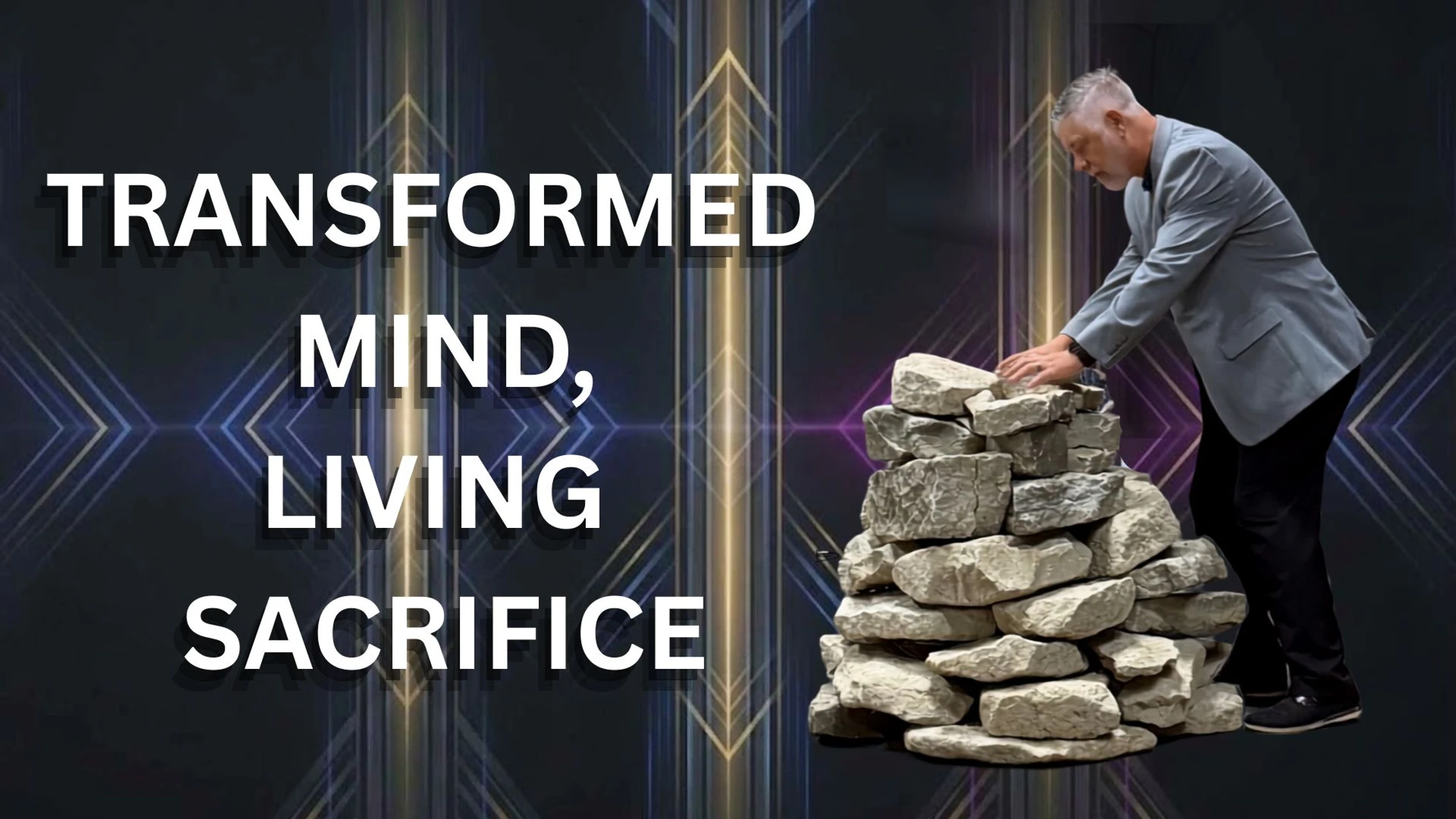
Stop Trying to Be Relevant: Why God Wants to Disrupt Your Life
What if the most important thing God wants to do in your life today isn't to comfort you — but to disturb you? Not in a destructive way, but in a way that wakes you up, burns away everything that's holding you back, and sets you on the path He actually designed for you?
That's exactly what the Apostle Paul was getting at when he wrote one of the most challenging passages in all of Scripture.
The Pivot Point: Romans 12:1-2
In Romans 12:1-2, Paul writes: "I appeal to you, therefore, brothers, by the mercies of God, to present your bodies as living sacrifices, holy and acceptable to God, which is your spiritual worship. Do not be conformed to this world, but be transformed by the renewal of your mind, that by testing you may discern what is the will of God, what is good and acceptable and perfect."
To understand why this is such a big deal, you need a little background. Paul had never actually been to Rome when he wrote this letter to the church there. He was preparing them for his arrival, and he'd spent the first 11 chapters teaching them deep theology — what it means to be a Christian, that we've all sinned and fall short of the glory of God (Romans 3:23), that salvation comes not by works but by the grace of God. Then chapter 12 hits like a pivot point.
"I've taught you all this stuff," Paul is essentially saying, "and now this is how you live in it."
If you want to wrap up Paul's theology in Romans 1 through 11, it really boils down to this: Jesus loves me, this I know, for the Bible tells me so. It's by His grace, His mercy, His sacrifice that we live and move and have our being.
The Mercies of God: Your Starting Point Every Morning
Notice Paul doesn't just say "mercy." He says mercies — plural. That's not just one moment when God has mercy on you. It's multiple mercies, every single moment, every single day.
"You want to figure out how to start your mornings? I remember the mercies of God. I remember where He's taken me from. I don't forget. I don't dwell on my past or my sins, but I remember where I was. I remember walking without hope, without joy, without love, without peace, without patience. I remember those days. But then I remember the mercies and where He's brought me from."
That's the starting point. Not your circumstances. Not the economy. Not anything else — but the King of Kings and the Lord of Lords who loves you.
A Living Sacrifice — Not a Dead One
Here's where it gets interesting. Paul says to present your bodies as a living sacrifice. In the Old Testament, when people brought sacrifices to God, the animal was killed first — the blood was spilled, and then the sacrifice was made. But Paul says that's not what God is asking of you.
"God don't need your blood. He doesn't need your blood. He's already done it. Jesus Christ hung on the cross, and He bled — eternal blood that will cover all of our sins."
The blood of Jesus has already accomplished everything it needs to accomplish. You don't have to beg, you don't have to plead, you don't have to wonder if it will work this time. It's already done. All you have to do is accept it.
So what does a living sacrifice look like? It's your energies — everything you say, everything you do, who you are. How you talk to your family, your co-workers, the person who cut you off on the road. What you're scrolling through on your phone. What you do when you walk into a friend's house or show up to work. The minute you wake up, your energies have started. The question is: what are you presenting them for?
Holy and Acceptable: Two Requirements
Paul puts a requirement on this living sacrifice — it must be holy and acceptable.
In the Old Testament, when a lamb was offered as a sacrifice, a priest would examine it as a veterinarian would. No blemishes, no broken bones, clear eyes, perfectly healthy. And your first reaction might be, "Well, I've got some broken bones. I've made mistakes. I've done things that have made me blemished."
Good. That's exactly where you should go with this — because that's where the blood comes back in. When you've accepted Jesus as your Lord and Savior, that blemish has been washed away. When the priest looks at you now, he sees someone holy — not because of anything you've done, but because of the sacrifice that was done for you.
But the sacrifice also has to be acceptable. And this is where it gets convicting. In 1 Samuel 15, the prophet Samuel confronts King Saul, who had disobeyed God's direct command but tried to cover it up by offering a big sacrifice instead. Samuel's response cuts right to the heart: God accepts obedience more than sacrifice.
"What did God tell you? Not the other person. Not your mommy, not your daddy, not some preacher. What did God tell you? That's the sacrifice He requires."
You could do a lot of work for God and have none of it accepted — because it's not what He told you to do.
Don't Conform. Be Transformed.
Paul then gives two commands that go hand in hand. First: don't be conformed to this world. This isn't just about appearance — it's about how you function, how you think, how you operate.
"I'm not supposed to be relevant to the world. In fact, what I pronounce as God, as what I say is my hope — they think is foolish. They think I'm intolerant because I believe that Jesus is the way, the truth, and the life. And I'm going to say, thank God I'm no longer relevant for this age."
Second: be transformed by the renewal of your mind. This transformation is an inward, ongoing change — affected by the Spirit alone, through reading the Word, through prayer, through worship. It's changing how you think, how you process information, how you see situations.
And when you do all of this — present yourself as a living sacrifice, stop conforming, let your mind be renewed — Paul says something remarkable happens. You become able to test and discern God's will.
The Great Disturbance
Karl Barth, an influential 20th-century theologian who had a radical encounter with the living God that completely changed his direction, called this concept "the great disturbance." He described Romans 12 through 15 as a call to look for moments where God breaks into your ordinary day and disrupts everything.
Think about the Apostle Paul himself — then known as Saul — on the road to Damascus (Acts 9). He was heading in completely the wrong direction, persecuting Christians, when Jesus met him and turned his whole life around. Jesus didn't destroy him. He said, essentially, "I love the zeal. You're just misguided. Let me point you in the right direction."
"Some of you, you've had those moments. You've heard a song, you've been driving down the road, and that song on the radio you've heard five trillion times — and all of a sudden the lyrics grip you a little bit different. And you've got to pull over because the tears are coming. What is that? It's a great disturbance."
In Psalms 18, David writes that the Lord delights in him. That's a great disturbance. Not just that God loves you because He has to — but that He actually delights in you. He enjoys you. That changes everything.
Putting It Into Practice
So what does this look like on a Monday morning? Here are some next steps that flow directly from Romans 12:1-2:
Start your day by remembering the mercies of God. Before you check your phone, before you scroll through the news, take a moment to remember where He's brought you from. That's your foundation.
Ask yourself: what are my energies presenting today? Every conversation, every scroll, every interaction — it's all part of the living sacrifice. What are you offering?
Give God permission to disrupt you. When you're reading the Word, when you're in a conversation, when you're watching TV or sitting in a meeting — open yourself up and say, "God, if there's something here that's not of You, disrupt me."
Get in your Word. "If you don't know what your word says, you are never going to live the life that God has for you fully." The more of God's Word you have in you, the more equipped you are to test what comes at you and discern what's truly from Him.
Stop praying only for the harvest — pray for the laborers. Jesus said in Matthew 9:37-38 that the harvest is plentiful but the laborers are few, and to pray for laborers. You might be the one God wants to use. Pray for yourself. Ask God for the words, the boldness, the opportunity.
The appeal this morning is the same as Paul's appeal to the Romans: You are loved by the King. He purposely created you, formed you, knows you by name. And now He's asking you to lay it all on the altar — your ways, your thoughts, your plans — and say, "God, burn away everything that's not of You, and show me everything that is."
That's the life of a living sacrifice. And it starts today.