
The problem with "you"
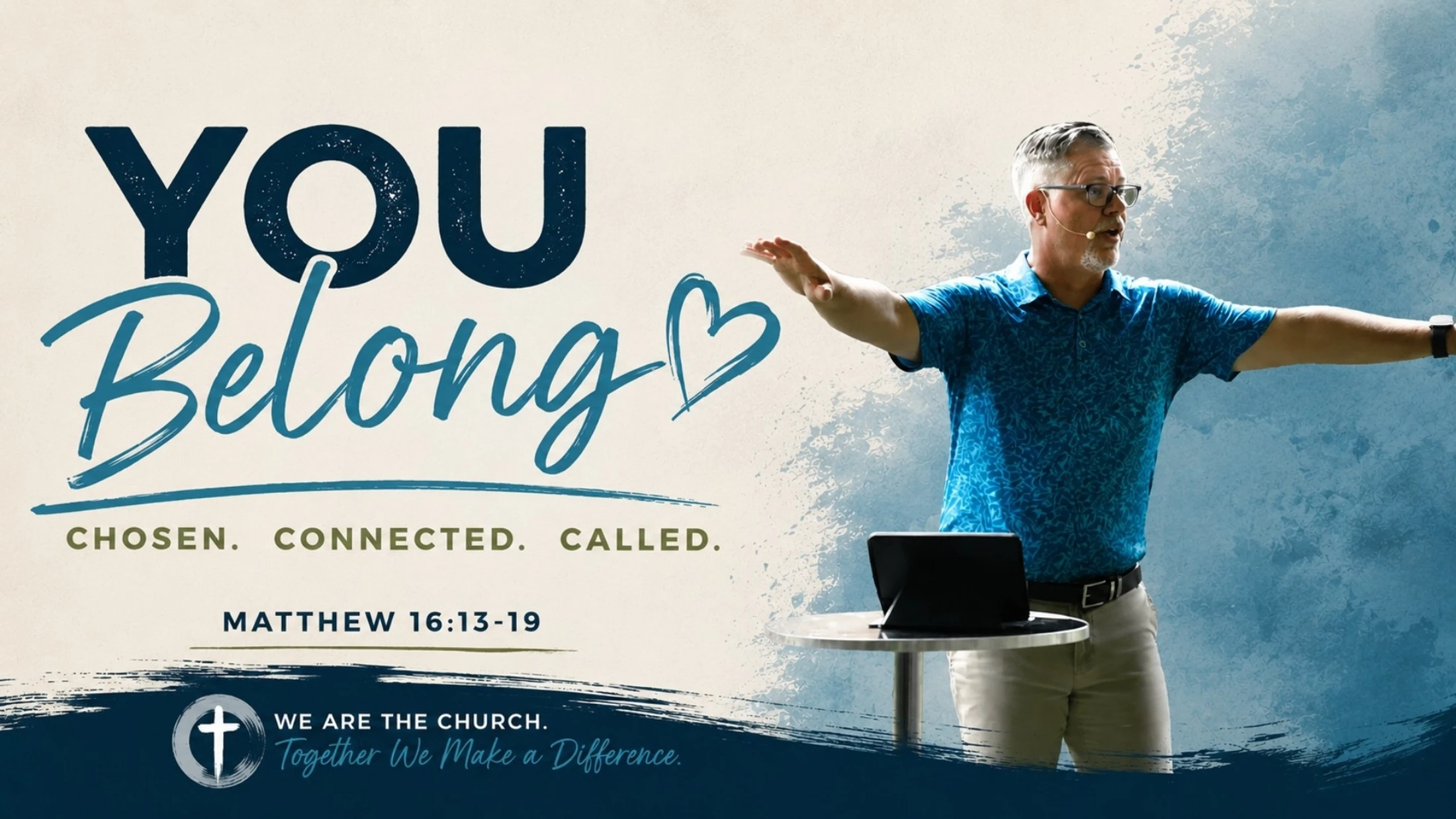
You Are Not Alone: Why the Church Is Stronger Together
Have you ever felt like you just don't belong? Like you're wandering through life wondering where you fit? What if the answer isn't found in figuring yourself out alone — but in discovering who you are together?
That's what God put on my heart to share. As I was praying, I felt like God wanted to remind us — not just individually, but as a body — who we are.
The Problem With "You" (And Why It Matters)
Here's something that changed the way I read my Bible. So often when we use the word "you" in Scripture, we're not sure if it means you — personal, singular — or y'all — you plural. And so often, it means you plural.
So much of the Bible, so many of the promises both in the Old and the New Testament, were to the "you" of the people, not the "you" of the singular. In fact, I couldn't receive the full blessing of God if I was singular. I had to be in the plural moment.
Think about it — what did God call? A people to be a family, and then to be a nation. He called Abraham, and from Abraham He said, "I'm going to make you a people." They went into Egypt as a family. They left Egypt as a nation. You see the plurality of God continually pouring out, trying to help them understand that it's together as one that you receive the full blessing of God.
Peter, Pebbles, and the Keys to the Kingdom
In Matthew 16:13-19, Jesus is talking with His disciples — a group of men who had been following Him, watching Him perform miracles, hearing His teaching. Jesus looks at them and asks, "Who do the people say that I am?" They gave Him the side talk — "You're a prophet, maybe Elijah, a good man." Then Jesus asks, "But who do you say that I am?"
Peter — bold, always running his mouth — speaks up and says, "You are the Son of God. You are the Messiah." And Jesus responds in Matthew 16:17-18: "Blessed are you, Simon Bar-Jonah! For flesh and blood has not revealed this to you, but my Father who is in heaven. And I tell you, you are Peter, and on this rock I will build my church."
Now here's what I need you to understand. Peter is not the rock — Jesus Christ is the rock. There's a distinction in the original language between Petros and Petra. Peter was a little pebble and that is what you and I are, little pebbles meant to be with other pebbles.
But then watch what Jesus does. He shifts from looking at a singular individual and says, "I will give you" — and here He's talking to all the disciples — "the keys to the kingdom." Do you hear it? You plural. As a body, as a church, as one — we are the ones who hold the keys to the kingdom.
The Gates of Hell Will Not Prevail — Against
Us
Jesus says in Matthew 16:18 that "the gates of hell shall not prevail." Not may not. Not possibly could not. Shall not. One hundred percent. But against whom? Against us — together, as one.
In the ancient world, the gates of a large walled city were where everything happened — fortification, judgment, politics, commerce. When Jesus says the gates of hell shall not prevail, He's saying everything the enemy tries to do politically, economically, judicially against your life — if you are "we," it will not prevail.
We see this in the early church. In the book of Acts, they had all things in common. They would sell their property as one had need. They protected and cared for one another. There was unity in the body—and they added to their number daily those who were being saved. It's the we together. When we combine as one body, nothing formed against us will prosper.
Why We Pull Away — And Why That's the Wrong Move
Isn't it interesting that when people go through heartaches, when they go through trials, one of the first things they do is separate themselves or isolate themselves from the body? We begin to think, "I need to deal with this on my own."
But what the Word tells us — what Jesus says — is don't deal with it on your own. You were never supposed to be on your own. God from the very beginning created a nation, a people to be together. And then He grafted the church into that and said, "Now you've got the body — the fullness of God in the body."
Do you realize that when we join in one song, when we worship together, we carry the fullness of God in the body? I remember a theologian who was one of the foremost experts on the Song of Solomon. He said, "I might have one-half of one-tenth of a percent of God's heart on this book." But then he said, "In an auditorium together, maybe all of us can get to 10 or 11 percent. The more of us that come together, the more unified we become — all of a sudden the fullness of the body of Christ shows up."
You Are a Chosen Race, a Royal Priesthood
In 1 Peter 2:9, the Apostle Peter — yes, that same bold pebble — is writing to multi-ethnic churches, people who are trying to figure out how Jews and Gentiles could possibly come together. And he says this: "But you are a chosen race, a royal priesthood, a holy nation, a people for his own possession, that you may proclaim the excellencies of him who called you out of darkness into his marvelous light."
Life Church — you are a chosen race. Every single one of you. You are a royal priesthood — not just the pastor, not just those with titles. Every single one of you. God desires to work in and through you, to speak in and through you, to do great things in and through you.
And then verse 10 says, "Once you were not a people, but now you are God's people." That one impacts me every time I read it. The idea that I've actually been chosen to be part of this body.
You Really Do Belong
I'll be honest with you — growing up, I always wanted to be adopted. I didn't feel like I belonged in my family. I didn't enjoy my brother, didn't enjoy my sister. My stepfather was my stepfather. I always thought, "I don't belong here."
When I was in my 20s, I went to my grandfather's funeral — a man I had only met once, when I was 15. Afterward, my grandmother pulled out a picture and said, "I need to show you this — this is your grandpa at 21." We were twins. And in that moment, something shifted. I realized I really belong. I wasn't just found under a rock. It radically changed how I viewed my whole life.
That's what the body of Christ is meant to be. When you come into church, you go — I really do belong. Because you've been chosen. The King of Kings and the Lord of Lords has chosen you.
For some of us, we're waiting to see that picture. We're waiting for someone to confirm that we really belong. Let me confirm it for you right now — you really belong. And what you have to learn is what I had to learn at 21: just walk in it. Walk in the calling He has for you. Own it — yeah, I really am part of this family.
Putting It Into Practice
1. Stop isolating when life gets hard. When trials come, resist the urge to pull away from the body. The enemy loves isolation. Run toward your church family, not away from it.
2. Find your function. You are not called to uniformity — you're called to unity. Find your role, your part, your calling within the body. When every part functions, the sound gets louder, and the impact grows.
3. Show up with one purpose. Come to church not just for the programs or the people — come to worship the King, to hear from His Word, and to be equipped to go back out into the world as His hands and feet.
4. Proclaim His excellencies wherever you go. We come into the church to be filled and equipped — then we go out. When people see that something is different about you, you get to tell them about a God who changed you and a community of people who helped you grow.
5. Remember who you are. Say it out loud if you need to: "I am a royal priesthood. I am a chosen nation. I am called by God." And then say it together: "We are a royal priesthood, a chosen nation, God's own possession."
The gates of hell shall not prevail — against us.